Circular Product Design Guidelines
Collected and Systematised.

Powered by Research from the CircularMetal Research Group
Unlock powerful design and supply chain guidelines for metal products. This tool transforms research-backed strategies into practical actions— guiding you toward smarter, more circular decisions from concept to end-of-life.
Get started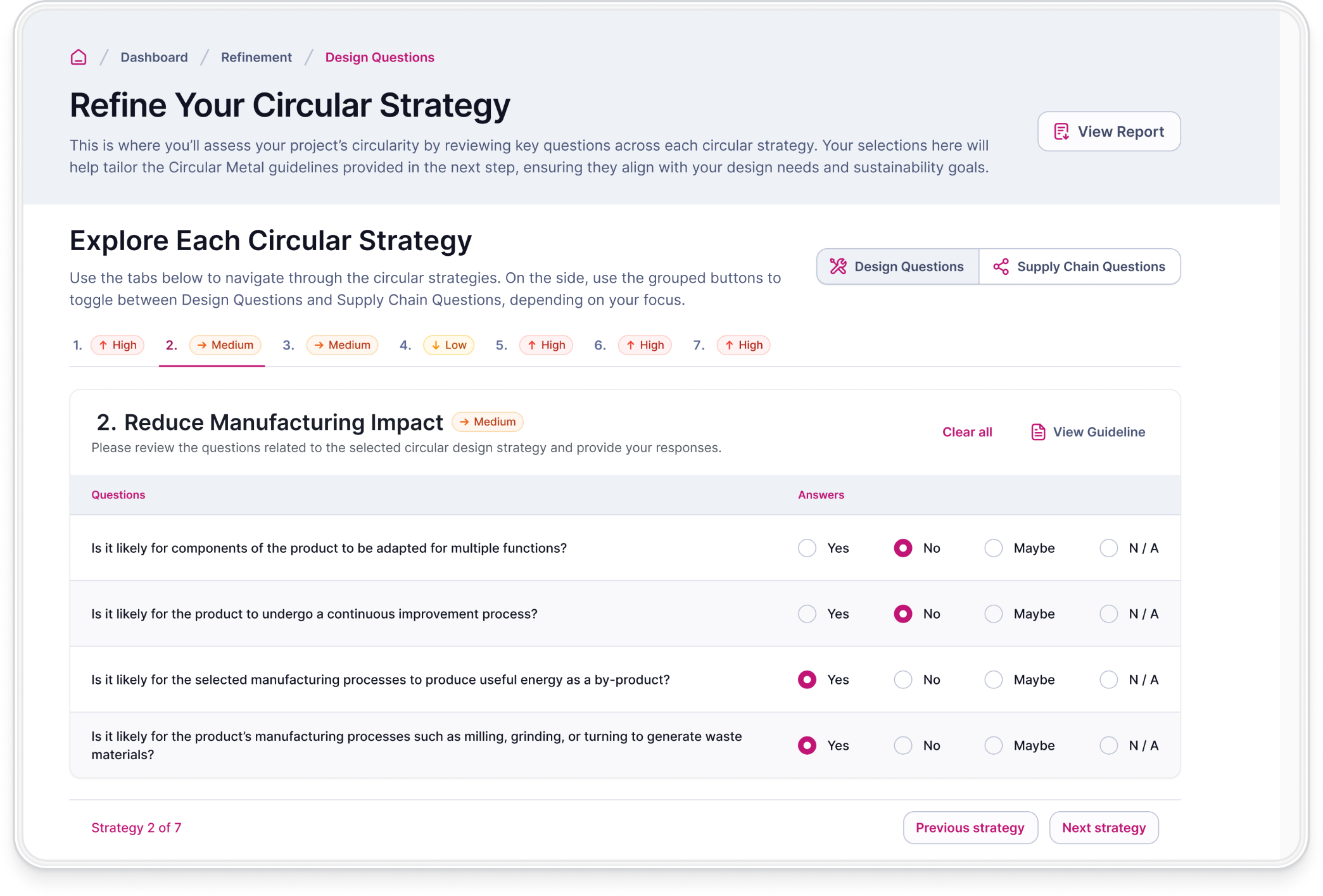





This interactive tool makes circularity actionable. Whether you're a product designer, supply chain planner, or sustainability officer, you'll find targeted insights and ready-to-apply guidelines.

Depending on your focus, toggle between product design and supply chain lenses to view relevant circular strategies, principles and guidelines.

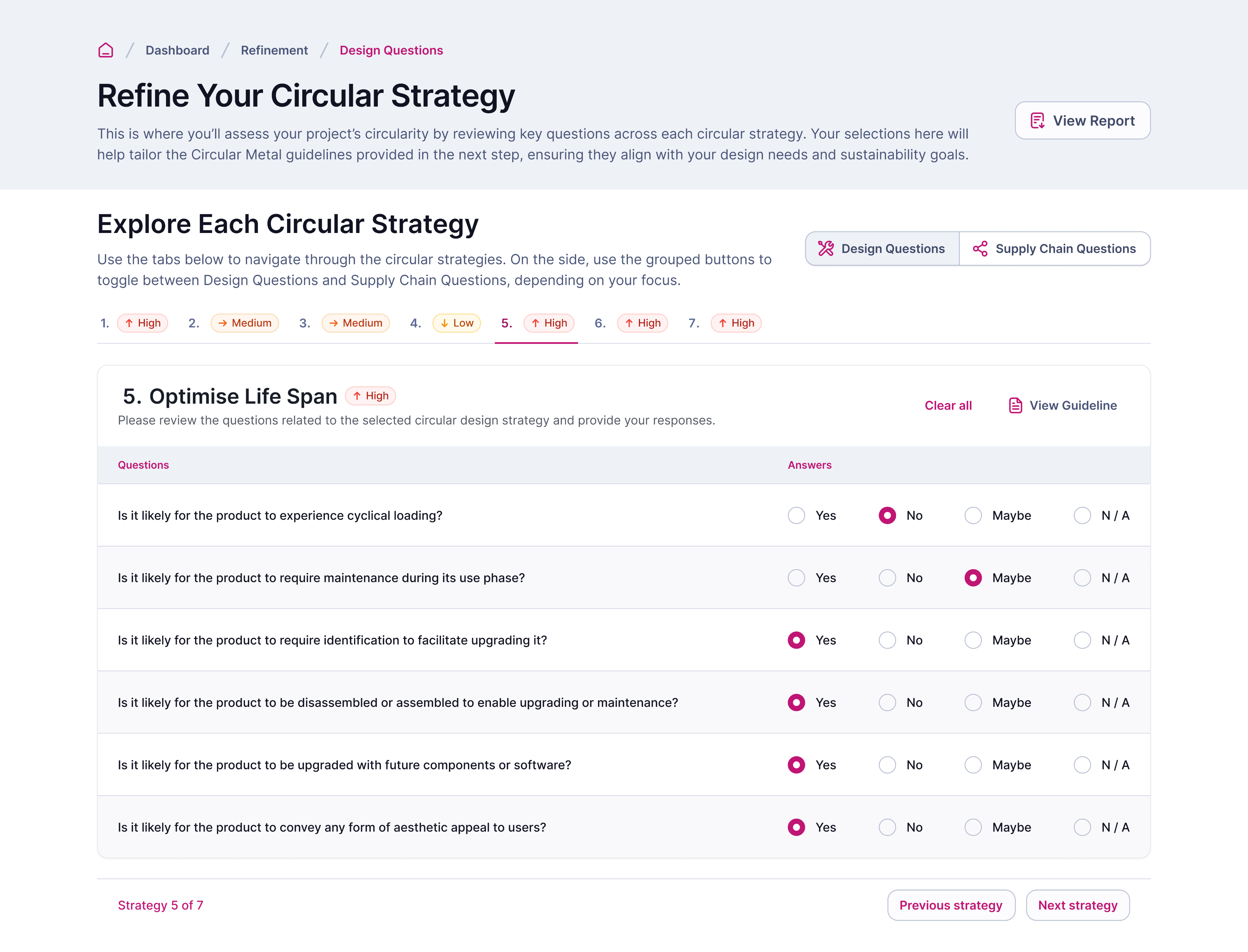
Whether you're focused on design challenges or supply chain decisions, grouped questions help guide you to the insights most relevant to your role.

Select your sector, product type, and preferred circular business model to tailor the guidance. Prioritise where your decision-making should focus

Prefer working offline or sharing with your team? Grab the full report anytime for free.
The CircularMetal tool organises its approach using a structured framework that includes strategies, principles, and guidelines. Each strategy has guidelines associated, which have been tailored to the metal sector.
The overarching circular design strategies are aligned with the five product lifecycle phases, spanning from reduce material impact to optimise end of life.
A circular design strategy defines the general direction for how a product, material, or process should be designed to support a circular economy.
A circular design principle is a more specific concept within a strategy that acts as a guiding rule or design philosophy to implement in order to fulfil that strategy.
A circular design guideline provides specific instructions or best practices to implement the principle. It serves as a practical recommendation to translate the principle into real-world design.
A design consideration refers to external factors, constraints, or challenges that must be taken into account. These can include technical, economic, environmental, regulatory, or social factors that might impact the feasibility or effectiveness of the design approach.
By integrating academic insights from UKRI’s CircularMetal research programme, this tool ensures a comprehensive approach to circularity in the metal sector.
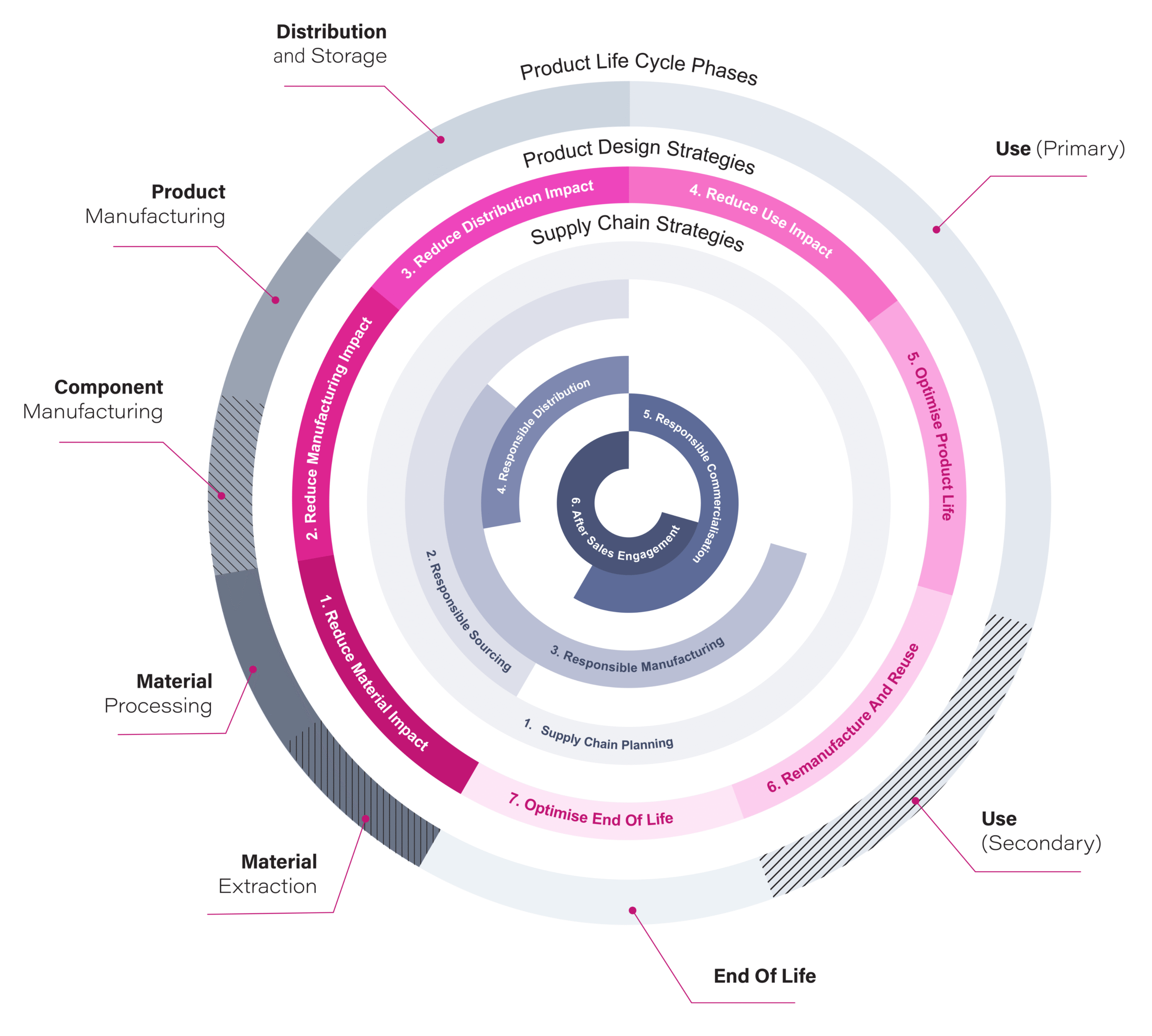
The tool integrates a congruent framework of circular design strategies with circular supply chain strategies to the whole lifecycle of a product. Within each of the overarching strategies is a combination of 500 corresponding circular strategies, principles and guidelines.
Collected and Systematised.
Collected and Systematised.
Discover a curated set of design strategies, principles, and guidelines tailored to the metal sector. Align your decisions with circular business models and drive impactful change.
Download the reports below
We have outlined 12 preferable visions that reflect the objectives of stakeholders in achieving a complete circular metal economy by the year 2050.
Download ReportA collection of essential roadmaps, each aligned with the visions initially outlined. These roadmaps function as strategic blueprints.
Download ReportWe thoroughly examine circular business models tailored for the different sectors across the whole circular metal supply chain, clarifying how value is created and delivered for each vision.
Download ReportBy systematically categorising over 200 actionable guidelines, the framework provides designers, engineers, and policymakers with a practical, decision-support tool to embed circularity into product development processes.
Download ReportWhether you're just getting started or deep in the design process, these answers can guide your next steps.
It’s designed for product designers, engineers, supply chain professionals, and sustainability strategists working with metal-based products.
Yes. Each section is viewable online, and a full downloadable report is available from the header.
It brings together both design and supply chain strategies into one experience, bridging often-siloed disciplines for a whole-system view.
It’s focused on metal-based product systems, but the circular principles may also inform thinking across other material types.
We're building the next generation of circular design tools—and we need your support to take it further. Whether you're a researcher, policymaker, designer, or potential funder, we'd love to hear from you.
